FlatSat Satellite Learning Kit: Overview
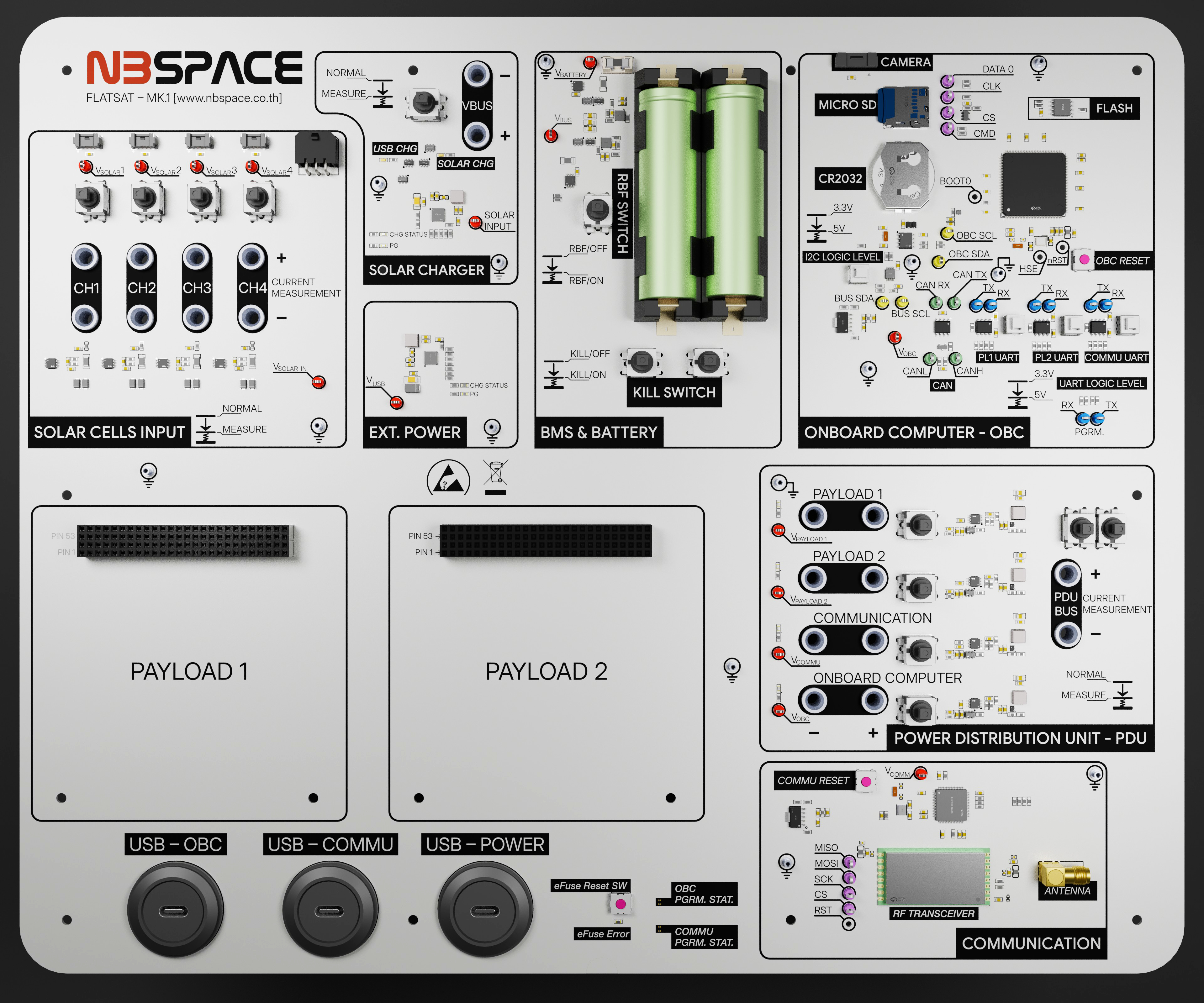
Welcome to the FlatSat Learning Kit documentation. This kit is a comprehensive educational platform designed to provide a hands-on understanding of satellite engineering. By laying out the core components of a CubeSat on a flat, accessible plane, students and engineers can easily study, program, and test the fundamental systems that make up a modern small satellite.
The kit is divided into two primary segments: the Space Segment (the FlatSat itself) and the Ground Segment (the station used to communicate with the satellite).
System Architecture
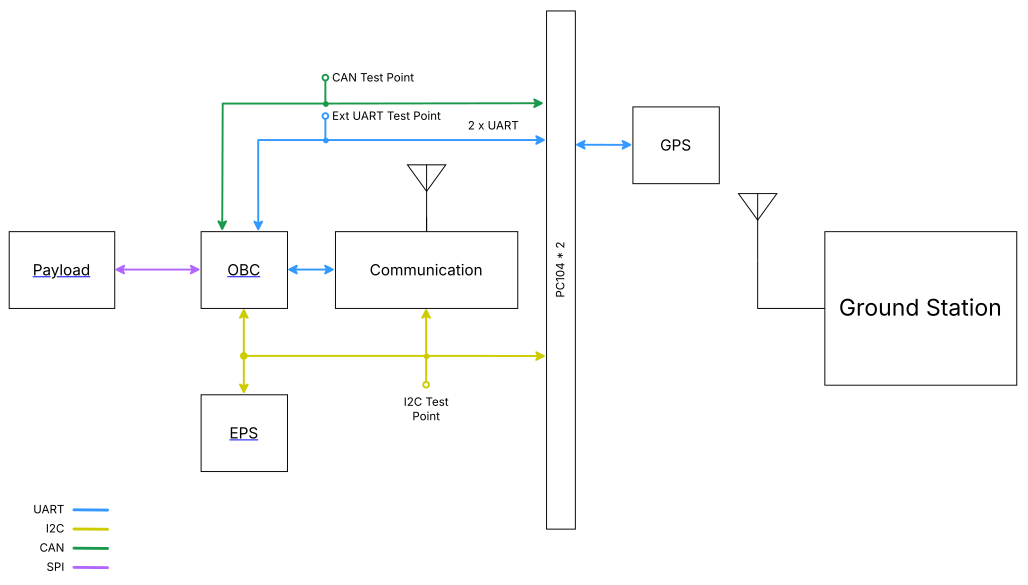
The FlatSat architecture centers around a main circuit board where various subsystems are integrated through a standardized PC104 Bus. A key feature of this design is its centralized control logic: while most subsystems have their own dedicated processors, the Electrical Power System (EPS) is controlled directly by the On-Board Computer (OBC) via a shared I2C bus.
Key Subsystems
1. On-Board Computer (OBC)
The OBC serves as the primary "brain" for the entire satellite. In addition to managing mission logic and data handling, it also acts as the controller for the EPS hardware.
- Core MCU: STM32F429ZI.
- Key Functions: High-level processing, GPS data acquisition, and executing control logic for the EPS sensors and switches.
- Storage: Supports external SD Card and 2MB of internal Flash memory.
- Technical Details & Example Code
2. Electrical Power System (EPS)
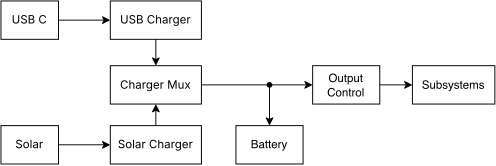
The EPS is the hardware layer responsible for harvesting, storing, and distributing power. Unlike other modules, the EPS does not have its own microcontroller; instead, all of its monitoring sensors and power switches are connected directly to the OBC's I2C bus.
- Components: Li-ion 18650 battery (17Wh+), solar charging simulation, and a network of I2C-controlled sensors.
- Control Mechanism: The OBC MCU directly toggles the power switches (ADM1177) and reads telemetry from current, voltage, and temperature sensors (INA226, TMP102) over I2C.
- Key Functions: Battery management, power rail switching, and real-time power telemetry.
- Technical Details & Example Code
3. Communication Subsystem (COM)
The COM module handles the wireless link between the FlatSat and the Ground Station, allowing for telecommands to be received and telemetry to be sent back to Earth.
- Core MCU: STM32F411RE.
- Radio Module: RFM98PW (433 MHz).
- Key Functions: Radio frequency modulation, KISS protocol implementation, and data packet handling.
- Technical Details & Example Code
4. Camera Payload
The Payload represents the "mission" of the satellite, consisting of an imaging system used to capture and process visual data.
- Specifications: 5 Megapixel resolution.
- Key Functions: Image capture and data transfer to the OBC via the SPI protocol.
- Technical Details & Example Code
5. Ground Segment (GS)
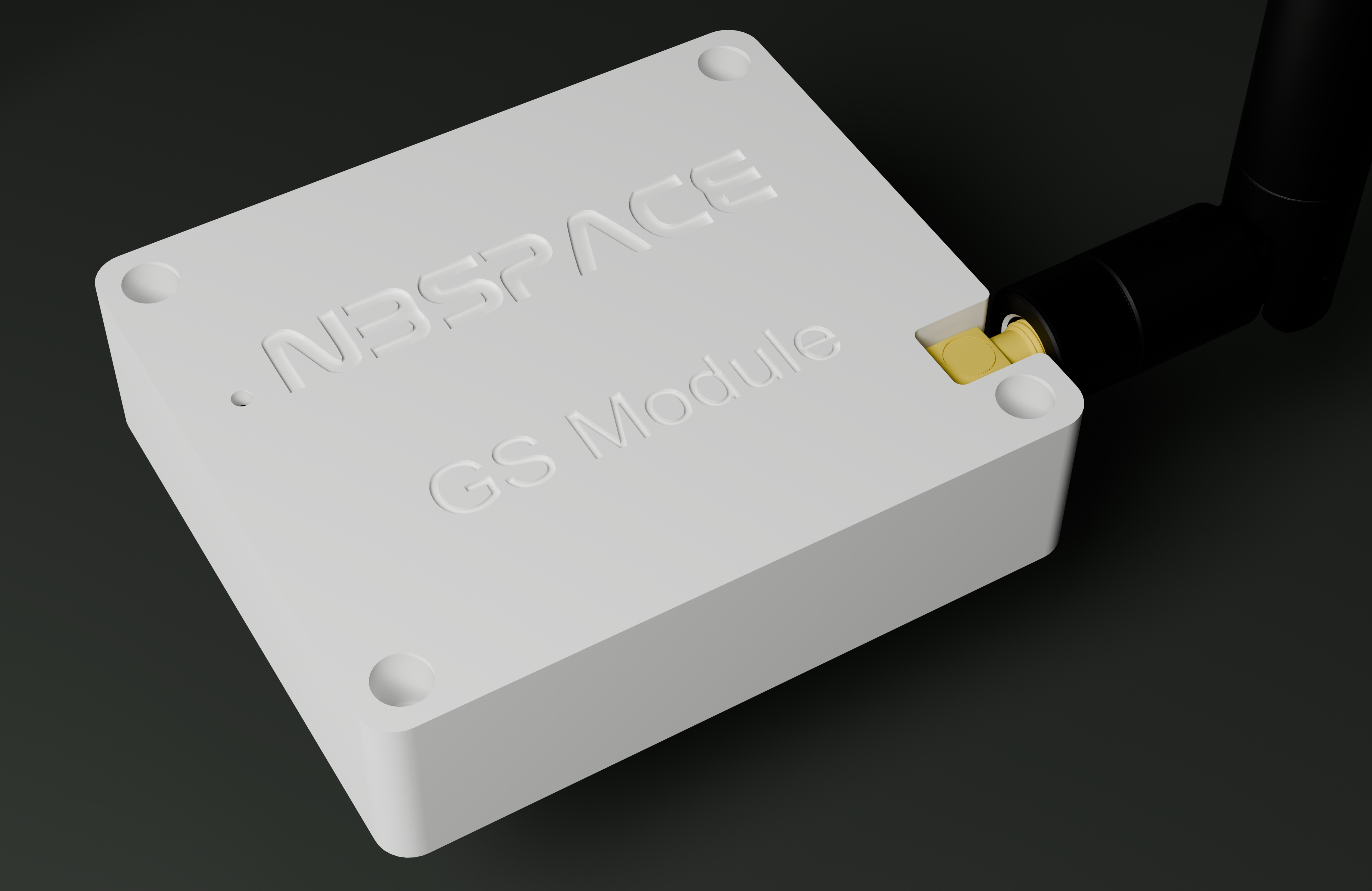
The Ground Segment is the terrestrial hardware that allows users to interact with the FlatSat, mimicking a real-world satellite ground station.
- Core MCU: STM32F103RC.
- Radio Module: RFM98PW (433 MHz).
- Key Functions: Receiving satellite telemetry and transmitting control commands via a PC interface (USB-C).
- Technical Details & Example Code
The PC104 Expansion Bus
The FlatSat Learning Kit is designed for modularity and extensibility, featuring two dedicated PC104 bus slots,. These slots provide a standardized interface that allows users to integrate their own custom subsystems or additional mission payloads into the satellite's architecture.
Each PC104 interface provides a comprehensive suite of power and data connections to ensure seamless integration with the existing satellite segments:
- Power Distribution: Includes two controllable power channels, allowing users to manage the energy consumption of their custom hardware effectively,.
- High-Speed Data Links: Provides direct UART and CAN Bus connections to the On-Board Computer (OBC) for robust command and data handling,.
Learning Objectives
Through this documentation and the associated hardware, you will learn:
- Unified System Control: Managing multiple hardware subsystems (OBC and EPS) from a single powerful microcontroller.
- Embedded Programming: Firmeare developing for STM32 microcontrollers in a space-system context.
- Communication Protocols: Implementing UART, I2C, SPI, and CAN bus for inter-subsystem and sensor communication.
- Power Management: Directly monitoring energy consumption and managing battery cycles through I2C sensor integration.
- RF Communications: Understanding 433MHz radio links and packet protocols like KISS.